
The right alternative to a business overdraft depends on what's creating the cash flow gap. How invoice finance, trade finance and a business line of credit compare.
At a glance
- What caused the gap decides the overdraft alternative: unpaid invoices point to invoice finance, a stock order to trade finance and ageing equipment to asset finance.
- The same overdraft can be cheap or expensive depending on how often you draw on it, because part of the cost is fixed to your limit.
- A business line of credit does the same job as an overdraft, so the real difference is who says yes, and how quickly.
Your application was declined or delayed, the limit on a facility you already hold was cut at review, or the conversation turned to the family home. There are several reasons for looking at alternatives to a business overdraft.
Choosing the right one depends on what is creating the gap. Money sitting in unpaid invoices calls for a different product from a stock order or a broken van, and the quickest route to the wrong facility is to shop on interest rate before working out which problem you are solving.
What a business overdraft actually is
A business overdraft is a credit limit attached to your existing business transaction account. It lets the balance fall below zero up to an agreed amount, and the account returns to positive as deposits come in. You draw on it without applying each time, and there is no fixed repayment schedule to meet.
Banks are the main providers, and they generally expect you to hold the transaction account with them already. Limits tend to be smaller than on dedicated lending products, so an overdraft suits a shortfall that lasts a fortnight better than one that runs for six months.
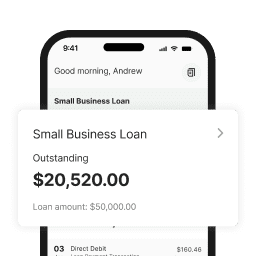
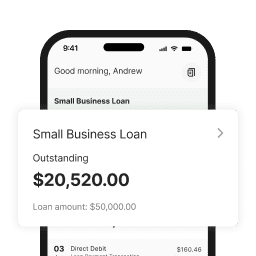
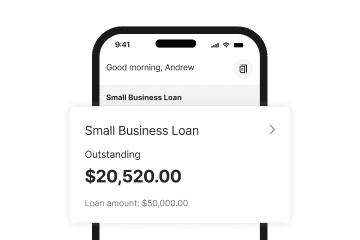
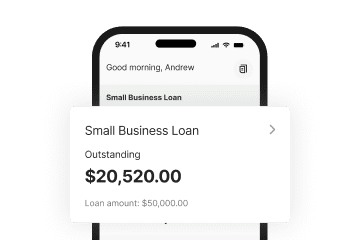
One of the most common alternatives to a business overdraft is a business line of credit. It works the same way through a different structure: you are approved for a limit, you draw what you need, you pay interest on the drawn balance, and repaid funds become available again.
Why bank overdraft applications stall
Timing is usually the first obstacle. Four weeks or more to conditional approval is a realistic timeline for a bank application, particularly where a property valuation sits in the middle of it. Non-bank lenders often work in days, so when a supplier is waiting or a stock deal has a deadline, speed decides it before the rate comes into it.
Security is the other common sticking point, and the loan sizes show why. According to Reserve Bank figures, a new small business loan backed by residential property is on average four and a half times the size of one that isn’t. An application that outgrows a bank’s unsecured appetite arrives at the question of what you own, and if you rent your premises or don’t want to risk the family home, the conversation ends there.
Then there is the review. Overdrafts are usually reviewed annually, and a limit that was approved last year can be reduced or withdrawn at the review even when nothing has gone wrong in the business. A facility you are relying on through a quiet season is only as reliable as its next assessment.
How overdraft costs are really calculated
Most overdrafts charge in two places, and comparing them on the interest rate alone misses one of them.
The first is interest on the drawn balance, calculated daily on what you have actually used. The second is a line fee or facility fee, charged on your approved limit whether the money is sitting there untouched or not.
Take a $50,000 facility with a line fee of 2% a year and interest at 12%. These figures are illustrative, but the pattern holds whatever the rates.
| Cost | Draws $10,000 for two months | Draws $30,000 for the full year |
|---|---|---|
| Line fee | $1,000 | $1,000 |
| Interest | $200 | $3,600 |
| Total for the year | $1,200 | $4,600 |
| Line fee as a share of the bill | 83% | 22% |
Same facility and same rate card. If you draw on it twice a year, most of what you pay buys access rather than borrowing, which is expensive on the money you actually use even at a competitive rate. If you draw all year, the line fee barely registers.
Establishment and annual review fees belong in the same comparison. If you want to get familiar with the terminology first, this guide to business loan terms runs through the ones you’ll hear most.
Fixing the timing problem without borrowing
Some cash flow gaps are a funding problem. Others are a terms problem wearing a funding problem’s clothes.
If the gap comes from customers paying on 60 days while your suppliers want 14, a facility covers the symptom and you pay for it every month the mismatch lasts. Shortening your payment terms on new contracts, taking a deposit before work starts, or invoicing on delivery instead of at month end removes the gap so there’s nothing left to finance. Find out more ways to get paid faster from a chartered accountant.
The Payment Times Reports Register shows how quickly big companies actually pay their small suppliers, free and without an account. Only businesses above a certain size have to report, so it won’t cover every customer, though where it does you’ll know what to expect before you agree to terms.
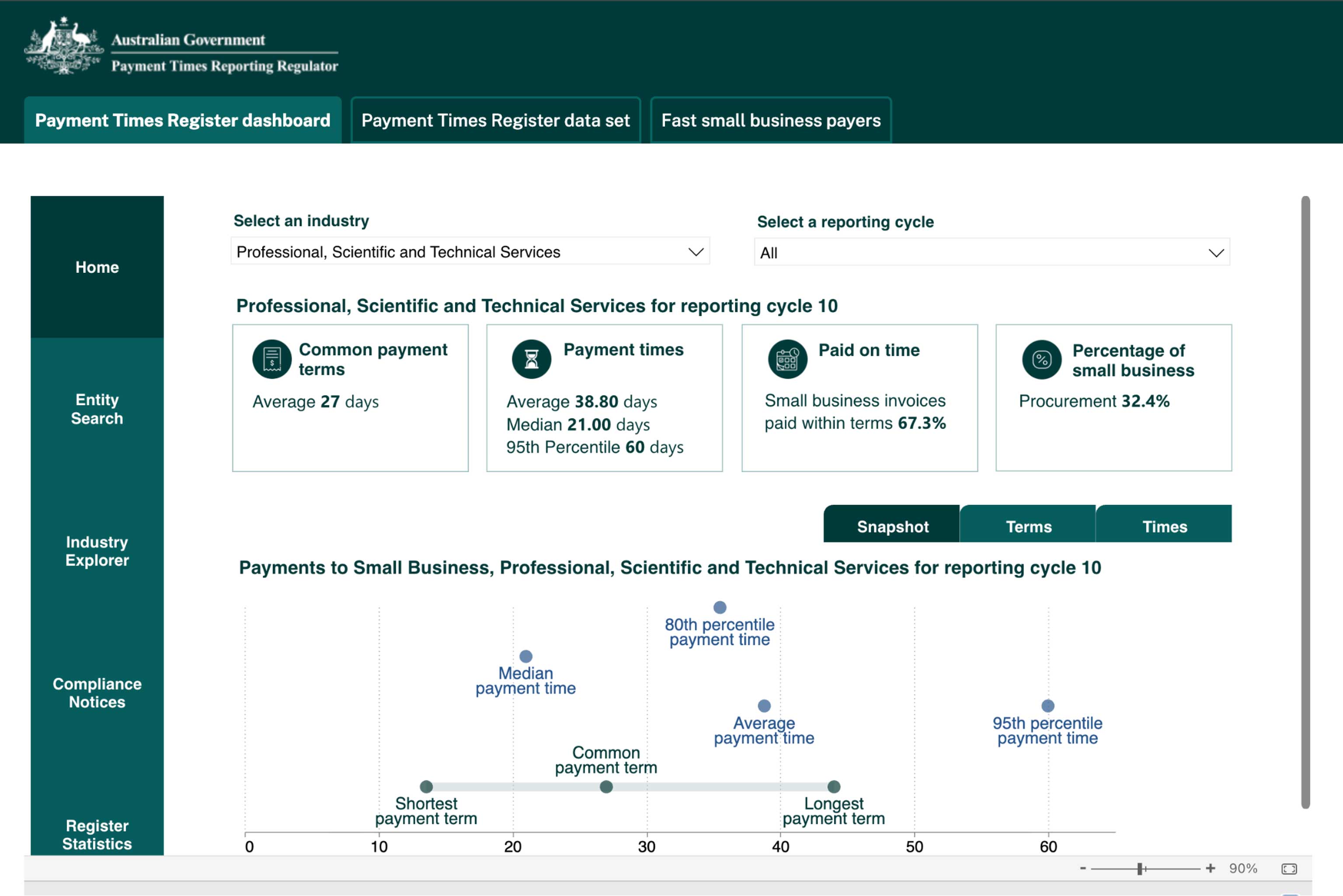
Where the timing can’t be changed, where the gap is larger than your terms could ever close, or where the opportunity won’t wait for a renegotiation, funding could help.
Matching the alternative to your cash flow gap
Once you know the gap needs funding, start with what caused it.
Money tied up in unpaid invoices
Invoice finance advances a portion of an invoice’s value before your customer pays, commonly up to around 85%, often within a day. Invoice a customer $20,000 on 60-day terms and you could have roughly $17,000 in the account tomorrow, with the balance less fees when they settle.
It suits B2B businesses on long payment terms, because the funding available grows as you win more work. The trade-offs are cost, since it can work out more expensive over a year than a business line of credit, and visibility, since your customers may be asked to pay the financier directly.
Suppliers who want paying before your customers pay you
A business credit card covers short gaps using the interest-free period rather than a loan, provided the balance clears each cycle. Carry a balance past the interest-free period and the rate is higher than on most business lending, which is why this only works over a few weeks.
The usual obstacle is that suppliers, landlords and government billers often accept bank transfer only. A bill payment service sits between your card and their bank account, so you can pay those bills with a card you already own and put most of your regular outgoings on the card. Make sure to check the transaction fee against the days of breathing room you gain.
Stock you pay for before it sells
Trade finance pays your supplier when you place the order, whether they’re local or overseas, and gives you a window before you repay. That window is set to match your trading cycle and varies widely between lenders, from a few weeks to several months, so ask whether it covers yours from order to sale. Since it is written against specific transactions, expect documentation per order and a lender who understands your supply chain. If you’re importing, work backwards from the freight cut-offs for Christmas stock when you set the window.
Equipment that needs replacing
Asset finance funds a vehicle, machine or fit-out with the asset itself as security. Because the lender holds something tangible, rates usually sit below what you’d pay on an unsecured facility, and terms stretch to match the working life of the equipment.
Avoid using a short-term cash flow facility for a five-year asset, or you’ll be repaying over months something that earns over years. Check the instant asset write-off rules before you buy, since the tax treatment can change what the purchase actually costs you.
Gaps that come back every year
A business line of credit suits a gap whose size you can’t predict. You draw for the quiet month, repay through the busy one, and draw again next year without a fresh application. It’s most often used to cover wages through a slow patch or costs while you close over the break.
The facility works and is priced much like an overdraft, so the choice comes down to which lenders will approve you, what they want as security, and how fast they move.
If the gap is one-off and you know its size, a working capital loan gives you a lump sum with fixed repayments and a clear end date. The deciding question is whether it happens again, and there’s more on that in this comparison of a business loan against a business line of credit.
Business overdraft alternatives
| Option | Best for | How you repay | Main trade-off |
|---|---|---|---|
| Business overdraft | Small, short-term gaps in day-to-day cash | Deposits into the account | Bank relationship expected, annual review, fee on the limit |
| Business line of credit | Recurring gaps of varying size | Draw, repay, redraw against a limit | Ongoing access fee applies to the facility |
| Invoice finance | Long customer payment terms | Settled when the invoice is paid | Higher effective cost, third party in your invoicing |
| Business credit card | Timing gaps of a few weeks | Cleared within the interest-free period | High rates on any balance that rolls over |
| Trade finance | Stock and supplier orders, especially imports | At the end of an agreed window | Documentation for every order |
| Asset finance | Vehicles, machinery, fit-outs | Fixed term matched to the asset | Funds the asset only, secured against it |
| Working capital loan | A one-off gap of known size | Fixed instalments over a set term | Interest on the full amount from day one |
The working capital financing guide covers each option in more detail, including what lenders want to see.
Questions to ask any lender before you sign
Facilities that look identical on paper often aren’t. Ask these five questions to find out where they differ:
- What is every fee charged on, and what does this cost me in a month where I draw nothing?
- How long until the money is in my account, and what could hold that up?
- What security is required, upfront and later, and does that change above a certain amount?
- When is the facility reviewed, and what would cause the limit to be reduced?
- What happens if I repay early, and can I make extra repayments without a penalty?
Get the answers in writing. Verbal quotes have a way of changing between the phone call and the contract. Always check with your accountant if you’re unsure.
he closest substitute for an overdraft
An overdraft limit can be cut at review, and a bank application can take a month. Neither is a problem if you already have somewhere else to draw from.
Prospa’s Business Line of Credit gives ongoing access up to $500,000 with no upfront asset security required for up to $150,000 in total Prospa funding. Check your eligibility online in about 10 minutes.