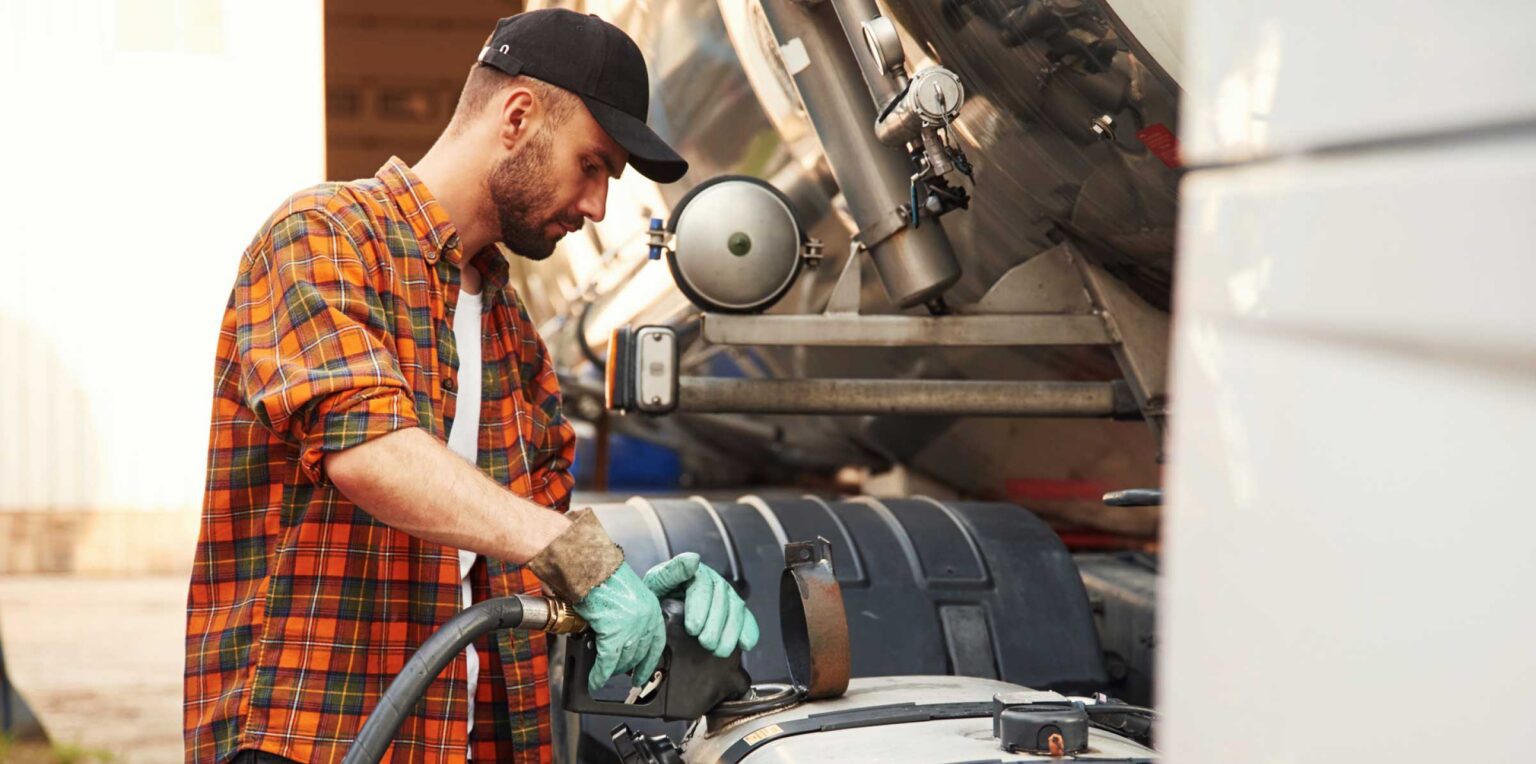

Diesel jumped 41% in a single month. Here are fuel-specific strategies for trades, transport, and construction, plus a free calculator to see what you could save.
At a glance
- Diesel jumped from $1.81 to $2.56 per litre in March 2026, and the temporary excise relief runs out on 30 June.
- Most tradies and small fleet operators don't track fuel cost per job or per vehicle, which makes it harder to spot where the real waste sits.
- Between fuel cards, fuel tax credits, route optimisation, and smarter quoting, there are practical ways to claw back thousands a year without changing how you run your business.
If you run a ute, a truck, or a fleet, your fuel bill has climbed faster than just about any other cost this year. Diesel went from $1.81 to $2.56 a litre in March, a 41% jump driven by global supply disruption. Unleaded climbed too, from $1.71 to $2.28.
From 1 April, the government halved the fuel excise, taking about 26.3 cents off the price at the pump. For heavy vehicle operators, the Road User Charge has also been temporarily set to zero, which saves another 32.4 cents a litre. It helps, but it runs out on 30 June and won’t be enough on its own.
This article covers practical strategies to cut your fuel costs that could save you thousands. Read our cross-industry guide if you’re after broader strategies for protecting your margins when costs are climbing. We’ve also built a free calculator so you can see exactly what your fleet is spending and what a 10–20% saving would look like in dollars.
Track your fuel cost per job before you start cutting
You can’t reduce a cost you haven’t measured, so track weekly fuel spend per vehicle. A single ute needs nothing more than a spreadsheet and your receipts. A small fleet is easier to manage with a fuel card or tracking app.
From there, work out your fuel cost per job or per delivery. If you’re quoting $2,500 for a job 40km from your base and your fuel cost has risen from $85 to $120, your margin just dropped by $35 without you changing a thing about how you run the job. Without that number, you’re guessing.
If your fuel card generates a monthly report, you already have a dataset worth analysing. Download it as a spreadsheet, upload it to ChatGPT or Claude, and ask: “Which vehicle is costing the most per kilometre, and what’s driving it?” You’ll get a breakdown in seconds that would take an hour to work out manually, and it often surfaces patterns that aren’t obvious from the monthly totals alone.
| Download your monthly fuel card report as a spreadsheet, upload it to ChatGPT or Claude, and paste this: |
|---|
|
“I’m a [trade/transport/construction] business owner with [X] vehicles. Here’s my monthly fuel card data. Which vehicle is costing the most per kilometre, and what’s driving it? Are there any patterns I should act on?” Download your monthly fuel card report as a spreadsheet, upload it to ChatGPT or Claude, and paste the prompt above. The AI can help identify high-cost vehicles, fuel usage trends, and opportunities to reduce operating expenses across your fleet. |
Not sure what your fuel is actually costing you each week? Use the calculator below to estimate your spend and see what a 10–20% saving could mean in dollars over a year.
Fuel cost calculator for trades, transport, and construction businesses
Adjust the inputs below to estimate your fuel spend and see what you could save in a year.
Vehicle type
Your estimated fuel spend
What you could save
Plan smarter routes to cut your fuel costs
A plumber running five jobs a day across three suburbs instead of five could save 30 kilometres of driving per day. At current diesel prices, that’s $30 to $40 a day in fuel, or close to $8,000 a year for the same workload.
If you’re booking jobs yourself, Google Maps works fine. If you run a small fleet, route optimisation tools like OptimoRoute or Circuit (now Spoke) handle multi-stop routing automatically and account for traffic.
For construction businesses, the same logic applies to deliveries. Every depot-to-site round trip you can combine or cut is money back in the business.
Stop burning fuel while you’re standing still
A truck running at a job site or a ute left going while you grab paperwork from a customer adds up across a week. Turning the engine off when you’re stopped for more than two minutes costs you almost nothing in wear or restart fuel on a modern diesel. Across three or four vehicles five days a week, the savings compound quickly.
For construction equipment, schedule your start-up times rather than leaving engines running between tasks. For fleet operators, most telematics systems flag excessive idling automatically, so you can spot which vehicles or drivers account for most of it.
Cut fuel consumption with basic vehicle maintenance
Under-inflated tyres alone increase fuel use by 3% or more. Staying on top of tyre pressure, air filters, and oil changes keeps fuel burn at baseline. A vehicle out of tune costs you at every fill.
A ute loaded for every possible job burns more fuel than one packed for the day’s actual work. Strip out what you don’t need each morning.
If you run multiple vehicles, look at whether each one is right-sized for its job. A V8 ute doing inner-city deliveries costs more to run than a smaller van doing the same work. When it’s time to replace a vehicle, the cheaper option to buy isn’t always the cheaper option to own.
Use fuel cards and buy at the right time
Fuel cards like BP Plus, Ampol, and Fleet Card combine three things you’d otherwise do separately: pump discounts, automatic tracking, and consolidated reporting. For a small fleet, the admin saving alone is worth it.
Apps like PetrolSpy show live diesel and petrol prices near you, so you can compare stations before you send a vehicle out. Across a fleet, consistently filling up at the cheapest nearby station rather than the most convenient one makes a real difference over a month.
If you’re burning more than 10,000 litres a month, bulk purchasing or on-site tanks may be worth exploring with a fuel supplier.
Claim your fuel tax credits
Fuel tax credits offset the excise you pay on diesel used in heavy vehicles, machinery, equipment, and generators, and many eligible businesses aren’t claiming them.
Until 30 June, the Road User Charge is temporarily set to zero, which simplifies the calculation. Road transport businesses don’t need to track fuel usage across public versus private roads during this period.
Use the ATO’s fuel tax credit calculator to work out what you’re entitled to claim. It applies the correct rates automatically and handles simplified claims under $10,000. If fuel costs are affecting your ability to meet your tax obligations, the ATO is also offering a temporary payment plan for businesses impacted by high fuel prices. Our small business tax deductions guide covers other deductions worth reviewing before 30 June.
Add a fuel surcharge to your quotes
A fuel surcharge is standard practice in transport. It’s less common in trades, but increasingly accepted by customers who understand what’s happening at the pump.
Adding a line like “Due to current fuel prices, a fuel component of $X applies to jobs outside a 20km radius” is one approach that tends to land well. Customers generally accept a transparent line item better than a quiet price increase across the board.
| Copy this into your next quote |
|---|
|
“Due to current fuel prices, a fuel levy of $[X] applies to jobs located more than [X]km from our base. This covers the additional fuel cost of travelling to your site.” Adjust the radius and dollar amount to reflect your actual costs. If you’re not sure what to charge, use your fuel cost per job calculation from the first section of this article as your starting point. |
It’s also worth reviewing your pricing zones. A job 50 minutes from your base costs you more in fuel than one 10 minutes away, and your quote should reflect that. At current prices, absorbing the extra cost across every job hits your margin hard.
Cover your fuel costs while you wait on customer payments
You pay at the pump today, but the invoice from that job might not land for 30 days, and the payment might take another 30 after that. For small operators, that gap between outgoing and incoming is where margins compress.
A business line of credit covers the gap between paying for fuel today and getting paid for the job. You draw what you need to cover fuel and operating costs while you wait on customer payments, and pay it back as the money comes in. You only pay interest on what you draw down, not the full limit.
The 2026 budget also includes $1 billion in interest-free loans through the National Reconstruction Fund’s Economic Resilience Program for manufacturing and logistics businesses managing fuel-related cash flow pressure.
If you’re upgrading to more fuel-efficient vehicles or equipment, the instant asset write-off at $20,000 is now permanent and could apply, so it’s worth talking to your accountant about the timing.
A little more certainty can go a long way
The price of diesel isn’t in your control, but your cash flow is. The operators who handle tight stretches best are usually the ones who lined up their funding options before they needed them, not after.
If you want to see what’s available before EOFY, you can check your eligibility with Prospa in under 10 minutes. No impact on your credit score, and no obligation to proceed.