
Looking to fund your next business move? Learn how to get a business loan, what documents you’ll need, and how to give yourself the best chances of approval.
At a glance
- When your business needs funds, being clear on why, how much, and when you need them helps you select the loan structure that best supports your goals.
- Lenders look at your trading performance and cash flow stability to confirm you can comfortably manage the loan repayments.
- Online lenders use real-time transaction data to offer faster decisions with less paperwork than traditional banks.
With so many lenders, eligibility rules, and application methods to choose from, navigating business loans can be tricky – especially when you need a solution that genuinely fits your needs.
Whether you’re starting up, expanding, or managing cash flow, every business owner wants to secure finance quickly so they can get back to work.
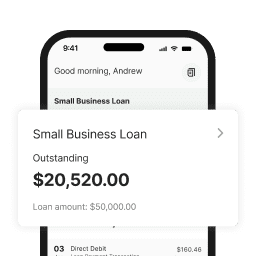
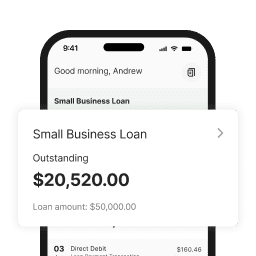
This guide breaks down the loan options available and the documents you’ll need to secure funding to support your next stage of growth, such as a Prospa Small Business Loan.
Before you apply
To find the right funding match, take a moment to look at your business through a lender’s eyes. Being clear on what you need – and what lenders need from you – will help you choose the right path and avoid delays.
1. Define your purpose
Consider exactly what you need funding for, how much you need, and how quickly you need it. Identifying whether you have a one-off expense or an ongoing cost is critical because it determines the funding structure you should apply for.
For example, let’s say you run a landscaping business and need to replace a ride-on mower before the summer rush. The upgrade costs $16,000, and waiting for cash flow means missing out on jobs. In this case, a small business loan provides the lump sum to secure the equipment upfront. Conversely, if you just need to cover wages during a quiet month, a flexible business line of credit might be the better fit.
2. Check your eligibility
Lenders want to see how your business generates revenue, how stable your cash flow is, and whether you can comfortably make those loan repayments.
Most lenders have basic criteria, such as:
- Trading history: How long you have been in business (often 6+ months for online lenders).
- Turnover: Your average monthly sales.
- Identity: Standard ID requirements for directors or owners.
Understanding these requirements upfront puts you in a stronger position to get approved. You can also try Prospa’s loan calculator to get a quick sense of what your business can comfortably afford before you apply.
Types of business loans to consider
Here are four of the most common funding paths, each suited to different stages of growth:
1. Traditional bank loans
Best for established businesses with strong financial history. Banks typically require detailed statements, security, and longer application processes, which can suit long-term investments but may be slower if you need funds quickly.
2. Government-backed loans or grants
Helpful for newer operators, startups or specific industries. Eligibility criteria can be strict, but these programmes may offer competitive terms or support for early-stage businesses that haven’t built long trading histories yet. To find an eligible programme, use the Grants Finder from the Australian Federal Government business portal.
3. Startup business loans
Designed for new businesses without long-term financials. These options can suit founders exploring how to get a startup business loan, as lenders focus on forecasts, early trading activity and the strength of your business model.
4. Alternative or online lenders
A practical option when speed and simplicity matter. These lenders often assess recent bank activity, cash flow health and current performance rather than years of paperwork, making them suitable for businesses that need funds quickly or don’t meet traditional bank criteria.
Knowing how each loan type fits different business needs helps streamline your decision.
Documents needed for a business loan
The next step is getting your documents in order. Most lenders rely on a few core items that show how your business is performing and help confirm that the amount you’re applying for makes sense.
In most cases, you may be asked for:
Recent bank statements
Bank statements help lenders see your day-to-day trading activity in real time. They look for incoming revenue, regular expenses, and any existing loan repayments to understand whether the new loan fits comfortably into your cash flow. Most lenders will request the last 3 to 12 months of business bank statements, depending on the size and type of loan.
Identification
To verify you and your business, lenders typically request a driver licence or passport, along with your ABN, business structure details (sole trader, company, trust, etc.), and sometimes proof of business address. If there are multiple directors or partners, each person will likely need to provide ID.
While this is the typical list across many lenders, the process can be much simpler with online lenders.
Proof of individual income
If you’re a director, partner or shareholder, lenders may ask for proof of your personal income to understand your broader financial position. This is typically your two most recent tax returns or ATO notices of assessment. For some business structures, additional documents, such as rental statements or dividend summaries, may be relevant.
Financial statements
For larger sums, lenders may use financial statements to understand how your business earns, spends and manages money. This usually includes a profit and loss statement showing revenue and expenses, a balance sheet summarising assets and liabilities, and, in some cases, a simple cash flow summary that outlines how money moves in and out of the business. These documents help lenders gauge the stability and overall health of your operation.
Document Checklist for Your Business Loan Application
Requirements vary by lender. While banks typically ask for all documents below, online lenders like Prospa often only require ID and bank statements for smaller amounts.
- Financial statements: For bank loans or larger amounts (e.g. over $150k), you will likely need to upload your latest profit and loss, balance sheet, and a simple cash flow summary.
- Proof of individual income: Traditional banks usually request your two most recent tax returns or ATO notices of assessment if you’re a director, partner, or shareholder.
- Recent business bank statements: Almost all lenders will ask for between 3–12 months of statements. Make sure they are up to date and clearly show your trading activity.
- Identification: A driver licence or passport is standard for all lenders, along with your ABN and business structure details (sole trader, company, trust).
Banks vs online lender applications
Even though many lenders ask for similar core documents, the way you submit them and how quickly your application moves can be very different.
Banks usually follow a traditional, document-heavy process. They often require uploads or printed copies of financial statements, several years of history, formal business plans, and multiple rounds of back-and-forth before anything progresses.
Online lenders take a streamlined, digital approach. Instead of compiling years of reports, you can securely share your bank transaction data, confirm your business details and complete simple ID checks. This gives lenders real-time insight into your trading performance and allows them to assess your application far more quickly.
Why many small businesses prefer the digital route:
- Faster decisions thanks to real-time access to trading data
- No need to upload PDFs, scan documents, or chase old statements
- Simple online ID checks and business verification
- Less admin and fewer delays
For your landscaping business, an online lender may offer the speed and flexibility needed to secure equipment before demand spikes.
|
When Tita’s Cakes needed to expand fast, Angelli Morilla didn’t have time for a slow or paperwork-heavy process. A Prospa loan let her secure funding quickly, purchase a delivery vehicle and reach more customers without losing momentum. “The process to apply for funds was seamless. I remember thinking: ‘That was the easiest process. It was quick, it was easy.” — Angelli Morilla, Baker |
|---|

If you need fast, flexible funding, you can explore options like a Prospa Small Business Loan or Business Loan Plus to see which option suits your needs.