
7 practical ways Australian SMEs are using artificial intelligence in business to cut costs and drive growth. From predictive revenue to automated admin, see what’s possible today.
AI has moved beyond the hype phase, which promised AI would “magically fix” everything at the push of a button. The reality has proven to be far more practical. Australian business owners are now using AI as a force multiplier, equipping themselves and their workforce to work faster and more strategically.
When used this way, AI allows small teams to punch above their weight and gain a competitive advantage in the current high-inflation economy. According to the Decidr 2025 National AI Readiness Index, 90% of Australian SMEs are already using AI tools like ChatGPT. However, fewer than half feel confident they are getting the full value from it.
Below, we explore seven practical ways you can use AI in your small business to drive growth today, backed by the latest data.
Predict revenue and protect profit margins
According to Xero AI Readiness Report, businesses that use AI daily are 2x more likely to see revenue growth compared to those who never use it.
Instead of making decisions based solely on what happened 30 days ago, predictive AI tools can act as a “Virtual CFO,” analysing your historical payment data to identify patterns you might miss.
They can flag cash flow gaps weeks in advance, identify slow-paying clients, and even predict seasonal inventory needs so you don’t get stuck with dead stock. Plus, you get the foresight to secure capital or adjust orders before a crisis hits, securing your margins.
Want to set this up? Read our full guide on How to use AI to predict revenue and protect margins.
Create high-impact marketing assets for less
AI is now standard practice in marketing, where adoption has hit 91% among Australian SMEs – the highest of any industry. Content creation is one of the top use cases, but business owners are also using AI to improve targeting, personalisation, and customer interactions to increase ROI.
| # | Top 10 Tasks AI Could Replace |
|---|---|
| 1 | Marketing and Content Creation |
| 2 | Administrative Tasks (e.g. scheduling, data entry) |
| 3 | Data Analysis and Reporting |
| 4 | Client Communications (e.g. emails, proposals) |
| 5 | Customer Service (e.g. chatbots, automated responses) |
| 6 | Financial Management (e.g. invoicing, bookkeeping) |
| 7 | Sales and Lead Generation |
| 8 | Project Management and Coordination |
| 9 | Inventory or Supply Chain Management |
| 10 | Other |
*Data obtained from a BizCover survey of 965 small business owners — May 2025. 2025 BizCover
Producing professional visuals used to require expensive photoshoots and days of editing. Today, generative AI tools are slashing those costs, enhancing your competitive positioning by allowing you to produce “big brand” assets on a small business budget. AI tools can act as a sub-editor, analysing your email copy to ensure it actually converts.
The handy prompt: Paste the text of your last three email newsletters into ChatGPT and ask:
“Based on these emails, analyse my tone of voice and suggest 3 specific A/B tests (e.g. subject lines or call-to-actions) I can run next week to improve my open rate.”
And keep an eye to quality. AI is fast, but not always spot on. Treat generative AI like a junior employee: give it a detailed brief, review its work, and never publish without a human editor.
Scale your expertise with an AI “Clone”
If you sell your time or expertise (like a coach or consultant), there are only so many hours in the day. AI allows you to duplicate yourself to serve more clients without burning out.
A survey from the National AI Centre (NAIC), part of the Australian Government Department of Industry, shows that 45% of SMEs in the retail and service sectors are already using AI to enhance customer interactions.
Tools like custom GPTs allow you to upload your own IP – blogs, methodologies, and past advice – to create a chatbot that answers client questions in your specific voice, 24/7. This is how you can give your clients instant support, and scale your business beyond 1:1 sessions.
Speed up recruitment and hiring
Finding the right talent is tough, especially when you have to sift through hundreds of applications. According to a LinkedIn and Mandala Partners Report, Small businesses currently fill only 52% of their job vacancies. Adopting a “skills-first” AI approach can expand your talent pool by more than 7 times.
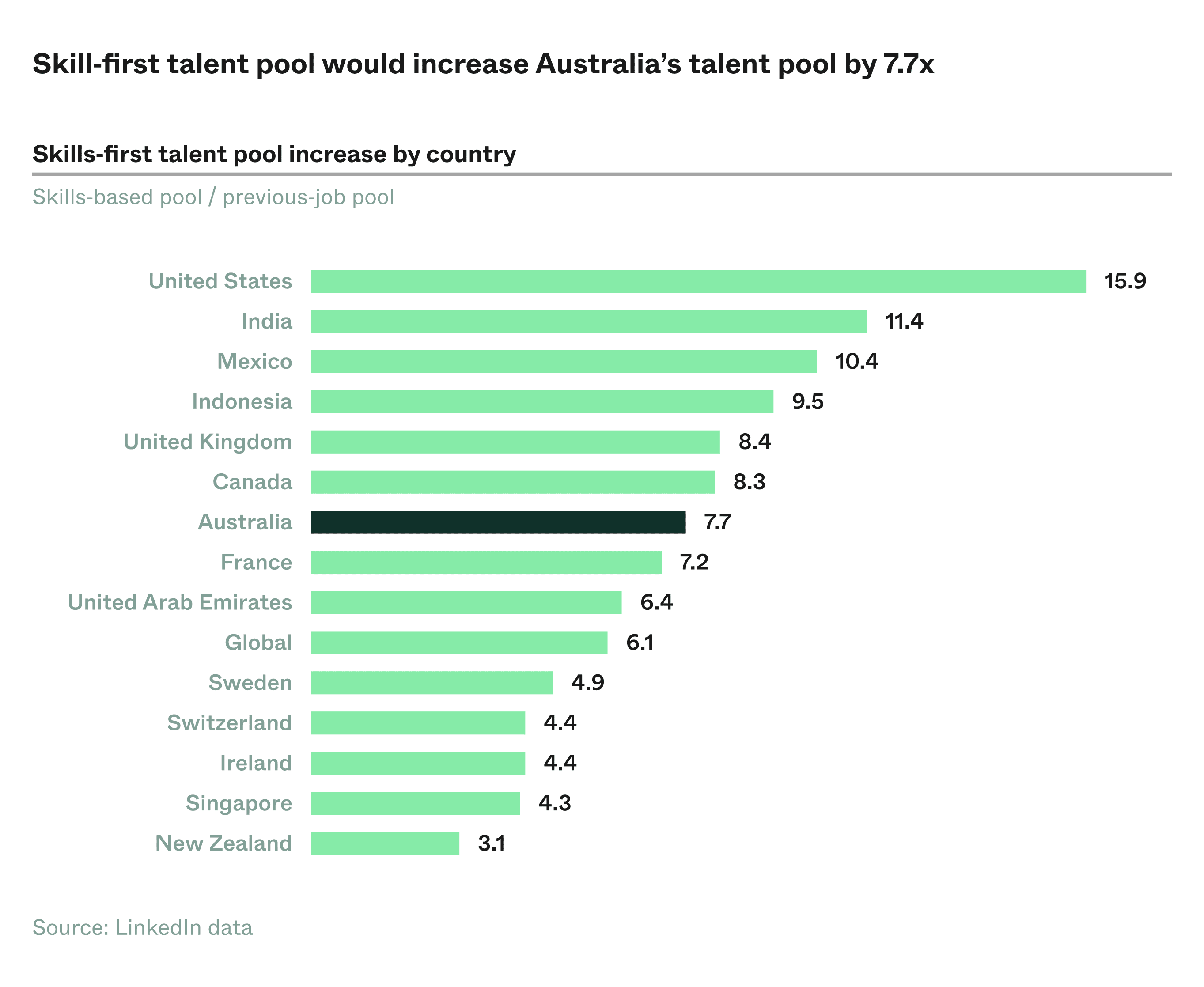
Use AI to remove bias from your job descriptions. Tools like ChatGPT can rewrite your ads to be more inclusive, helping you attract a wider, more diverse pool of talent. AI can also speed up the initial screening process by scanning CVs to shortlist candidates who match your specific criteria, helping you find the right person faster.
Automate sales outreach and engagement
Networking is vital, but manually messaging prospects on LinkedIn can take hours. AI automation tools can handle the initial outreach, warming up leads so you only step in when they are ready to chat.
By setting up smart sequences, you ensure your brand stays top-of-mind with potential clients automatically, without spending your entire day in your inbox.
How the workflow works:
- Step 1: AI identifies prospects matching your ideal client profile.
- Step 2: AI sends a connection request and a personalised “warm-up” note.
- Step 3: If they reply, the AI stops, and you step in to close the deal.
You can even use AI to monitor competitors.
The handy prompt: Paste this prompt into ChatGPT: “Scan [Your Top Competitor Name] LinkedIn posts and summarise: What topics are getting the most engagement for right now?”
Clean up data and merge spreadsheets instantly
For SMEs efficiency is the goal. In fact, 57% of the companies surveyed by Decidr cite “efficiency and cost reduction” as their primary reason for adopting AI – far outweighing the desire for new revenue.
AI improves operational efficiency by automating these repetitive tasks and streamlining workflows. Tools like ChatGPT Data Analyst can merge messy spreadsheets, reformat lists, and clean up duplicate entries in seconds – tasks that used to take hours of manual copy-pasting.
Don’t mistake automation for autopilot: you still need a pilot in the cockpit. Regularly review the work your AI produces to catch errors early. As your team gets comfortable, encourage them to “audit” their own workflows – if a task takes them more than 15 minutes a day, challenge them to find an AI tool that can cut it down to five.
Want to remove more bottlenecks? Read our guide on how to streamline processes to improve business efficiency.
Fix website bugs and write code
You don’t need to be a developer to make small fixes to your website. AI coding assistants can write snippets of code, troubleshoot errors, and help you maintain your online store.
Whether it is rewriting a plugin to improve security or fixing a broken layout on your mobile site, AI tools act as a “junior developer” that can handle the technical hurdles that usually stall small business projects.
What is the best AI for small business?
Business owners often ask: what is the best AI for small business? The answer is simple: the one that solves your biggest problem right now. Don’t try to do all seven at once. Pick the one area, such as predicting your revenue to protect cash flow, or automating your admin, and start there.
For even more examples, read how 3 Aussie SMEs are using AI right now to save time and money.
Ready to invest in new tech to scale your operations? Chat to a Prospa specialist about a Business Loan today.