
At a glance
- A business debit card is linked to an Australian-dollar account and works wherever the relevant card provider is accepted, online and in person.
- A multi-currency account lets you hold balances in several currencies at once and send international bank transfers.
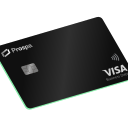
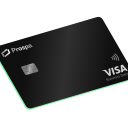
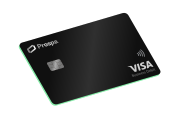
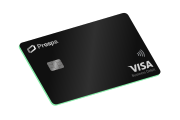
- The Prospa Visa Business Debit Card charges no foreign transaction fee on eligible card payments, with foreign-currency purchases converting to Australian dollars at Visa's rate at settlement.
When you start paying overseas suppliers, software subscriptions, or remote contractors, two products tend to come up in the same search: a business debit card and a multi-currency account. They sound similar, but they do different jobs. Understanding the difference can save you from paying for a feature you will never use.
What a business debit card does
A business debit card is a card linked to an Australian-dollar transaction account. You spend from the balance you hold, kept separate from your personal money so business and personal expenses stay apart.
Because it runs on a card network like Visa, it works wherever cards are accepted: online checkouts, in-store terminals, subscriptions, and recurring payments. A card like the Prospa Visa Business Debit Card can be used across Apple Pay (Apple Pay is a trademark of Apple Inc.), Google Pay (Google Pay is a trademark of Google LLC.), ATM access, and an optional rewards program.
What a business debit card is not built for is holding money in another currency. The account behind it holds Australian dollars. When you spend in another currency, the card network converts that transaction back to Australian dollars at settlement.
| Advantages | Things to keep in mind |
|---|---|
|
|
What a multi-currency account does
A multi-currency account lets you hold balances in several different currencies at the same time. You might keep U.S. dollars, euros, and pounds in the account, ready to spend or send in that same currency without converting back to Australian dollars each time.
This matters most for businesses that buy and sell internationally in volume – for example, paying overseas suppliers regularly, invoicing clients in their local currency, or moving money between currency pockets to avoid repeated conversion.
| Advantages | Things to keep in mind |
|---|---|
|
|
Card payments vs international bank transfers
The clearest way to separate these two products is by the payment system they use.
A business debit card pays through the card network. When you tap, insert, or enter card details online, the transaction runs over Visa or Mastercard. This is fast, familiar, and works for the huge range of merchants and services that accept cards, including most software subscriptions and online marketplaces.
An international bank transfer moves money directly from one bank account to another, often across borders, through the banking system or a specialist transfer network. You need this route when a supplier does not take card and wants you to pay into a bank account, or when you are sending large amounts where card limits would be a problem.
| How Prospa handles foreign currency. Prospa does not hold foreign-currency balances or send international bank transfers. Your Prospa Business Account is an Australian-dollar account. When you make a card transaction in another currency, it converts to Australian dollars using Visa’s rate at settlement, so you can pay overseas merchants on your card without managing a separate foreign-currency balance. |
In practice, a card suits the kind of international spending most small businesses actually do – software subscriptions, freelance platforms like Upwork or Fiverr, Shopify plugins, AI tools, and cloud hosting billed in U.S. dollars. For the many small businesses, that is the full extent of their cross-border payments, and a card handles it all without any extra setup. When you need to wire funds to a supplier’s bank account abroad, that is a different job – one a multi-currency or specialist transfer provider handles.
When a simple Australian-dollar debit card may suit the job
None of this is about one product being “better.” It is about matching the tool to how your business actually pays, and for many Australian small businesses, that picture leans toward card-based spending. A multi-currency account is the right call when foreign-currency cash management is a core part of your operations.
A business debit card may be simpler and more practical when:
- Your international spending is mainly card-based: software, subscriptions, online services, and the occasional overseas purchase
- You want one Australian-dollar account for all your business transactions, with spending visible in one place
- You would benefit from everyday features like Apple Pay, Google Pay, and ATM access
- You do not need to hold balances or send bank transfers in foreign currencies
If that is the shape of your payments, a straightforward Australian-dollar business debit card may be the simpler option – with potential for lower-overhead choice, and with foreign-currency card transactions simply converting to Australian dollars at your card providers rate when they settle. When your needs grow into regular foreign-currency holdings or international bank transfers, that is the point at which a multi-currency account becomes worth the added structure.